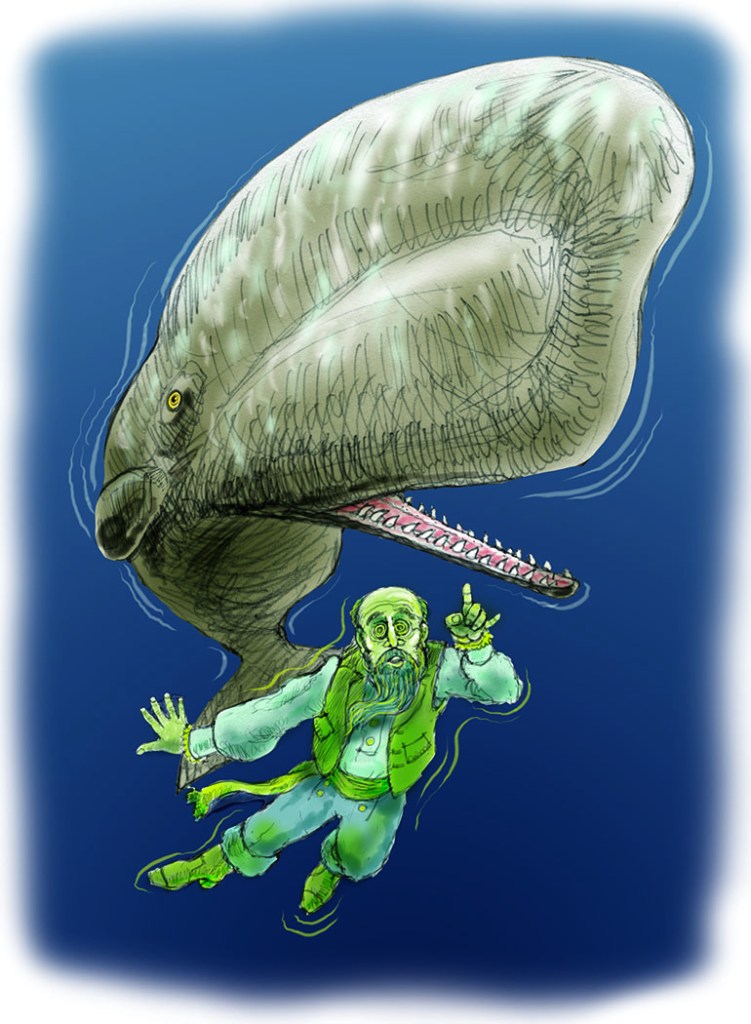
Superstition gets a bad name. It’s what the Old Fellahs in the stone age called science. When you don’t know beans about how the world works, you construct an approximate reality structure. The moon gets eaten, then reappears. What ate the moon? Something impressively big, part of the sky, a sky god with a variable appetite. Give it a name? Be careful not to insult it? Sounds reasonable to me.
Superstition is a patch against the void. We’re blessed and cursed with rational minds: we need answers against chaos, reasons for the unreasonable. There’s a fox, god, lion, llama who nibbles the moon, and he lives in the night sky where you can’t see him, but if you plant your spring peas when the moon is full, the moon eater doesn’t have an appetite for your peas. Benny planted in the full moon. Got lots of peas. Sounds reasonable to me.
Men o’ war sailors needed superstition badly, living under strict orders on a sea that could smile or eat sailors. Four on, four off, eight bells on deck, eight back to hammock, daily vulnerable to sudden, brutal punishments, excluded from choices. Jack Tar lived a poverty of reasons and a famine of volition.
They plied a sea that created luck in both colors, black and white. There were good omens like St. Elmo’s fire. St. Erasmus of Formia, known as St. Elmo, was the patron saint of sailors so he must have arranged the coronal discharge of ionized air molecules due to high voltage potentials created above a ship by the roiling clouds. The tips of spars and ironwork glowed blue or violet. While the fire was a good omen, the high voltage potential also warned of lightning strikes. You take your chances with saints.
Dolphins were always good luck. Dolphins playing (no other word for it) in the reflected force of the ship’s bow cleaving waves can be nothing but benign.
Cormorants, those ancient birds dressed darkly, were good omens. They were known to embody the souls of dead sailors. Gulls, too, were thought to be sailor souls but less mysterious.
Black cats may raise eyebrows ashore but were the best kind of luck companion at sea. Polydactyl cats – a common gene variation that gives some cats extra toes – were even luckier.
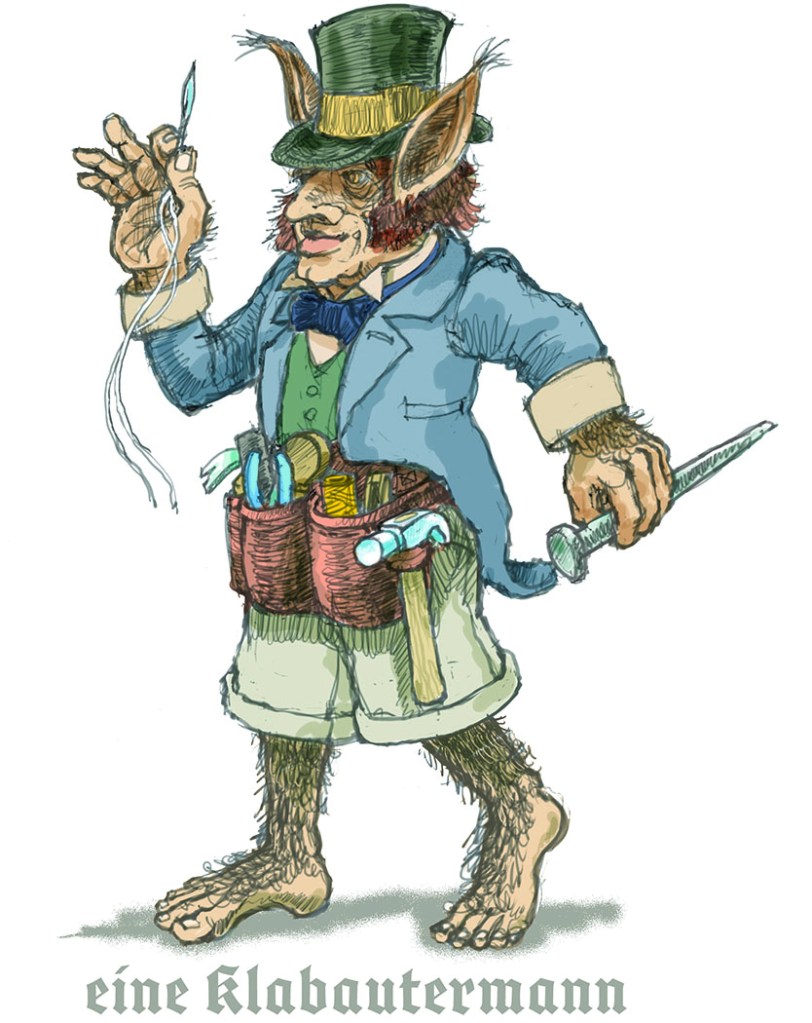
In the low countries of the North Sea busy sailors could get help from an avuncular goblin, Klabautermann, who would lend a hand in caulking or other chores. He was smallish, dressed in yellow, and often smoked a short sailor’s pipe. Alas, the kind goblin carried an opposing omen, like St. Elmo’s lightning; if too many sailors saw Klabautermann clearly, the ship was doomed. There’s always a catch.
If a sailor lived a generous life, loved and respected by his mates, bidding farewell was softened by knowing he was off to Fiddler’s Green, the sweet place where rum and beer flowed endlessly, brought by barmaids of elastic virtue.
The counterpart to Fiddler’s Green was the abyss, the ocean bottom known as Davey Jones’ Locker. Who was this fellow?
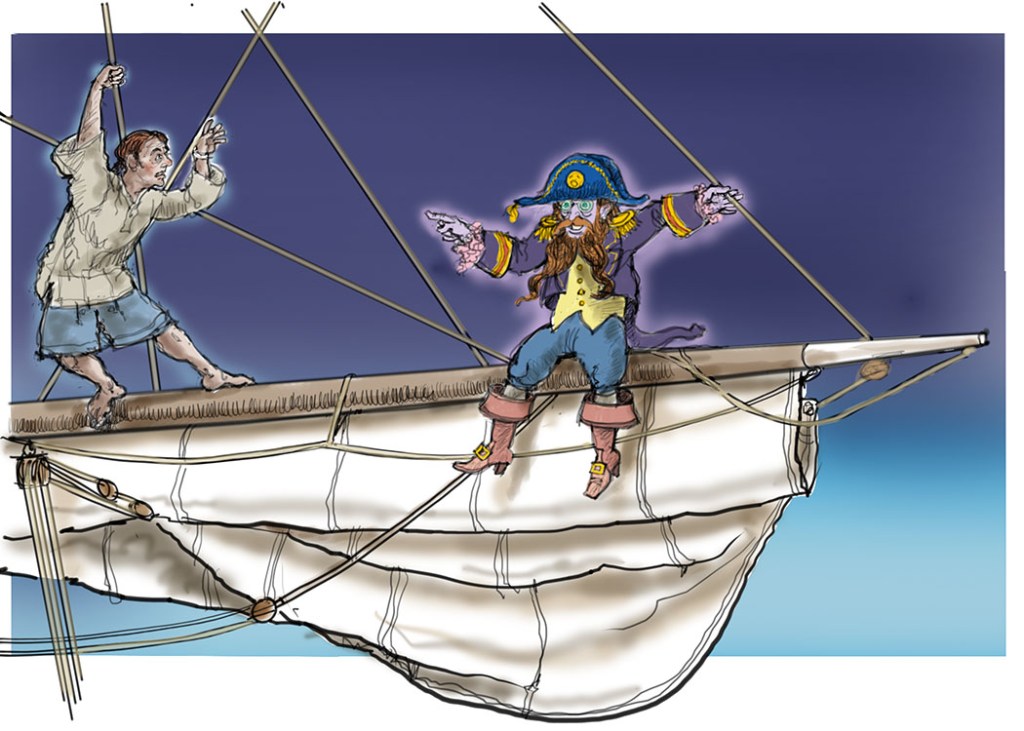
There are a dozen etymologies favoring various homelands and yarns but the most likely is a two-barreled cinch. “Davey” is a verbal cognate of duppy, which is an evil spirit in the Caribbean Islands. “Jones” is shorthand for that biblical bad omen, Jonah, who tried to run out on God’s command and was chastised mightily by being swallowed by a great fish. A jonah on any ship is one who brings catastrophic bad luck aboard and was often given “the graveyard lift” – an assist overboard during the nightwatch, midnight to 0400h, the graveyard watch. Sailors fear Duppy Jonah, or Davey Jones, and are aware he may come aboard to prophesy calamities, appearing in the rigging to this one or that one.
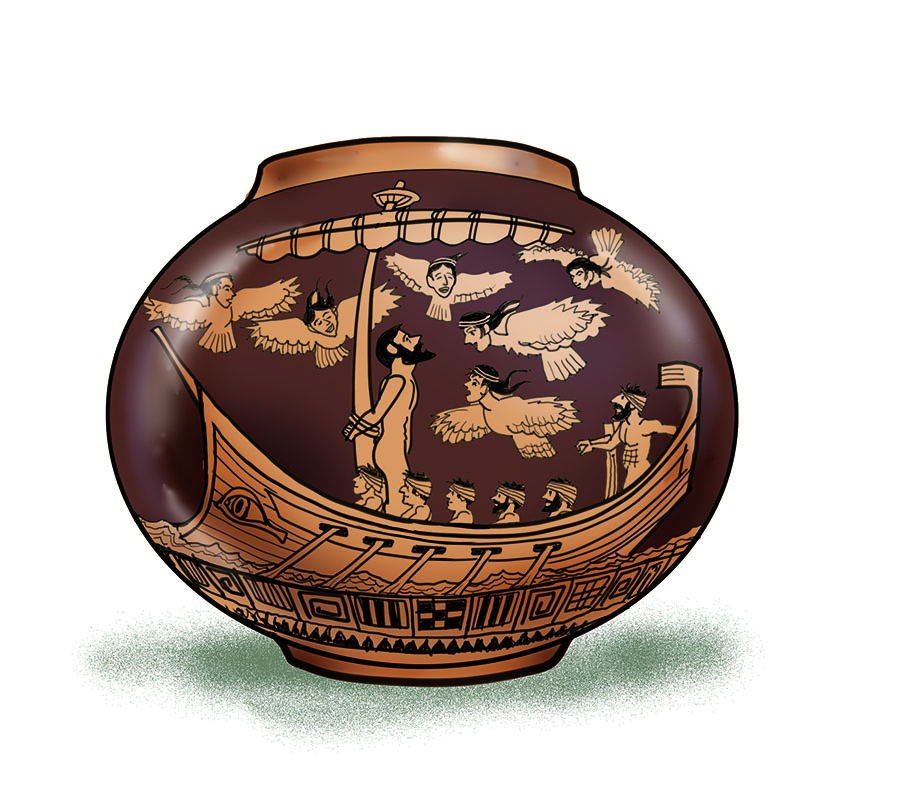
Antiquity provides a number of sailor-averse evil spirits. We all know about the syrens, those women with bird bodies who sing so sweetly that a helmsman might steer the barkie directly onto the rocks. Odysseus wanted to hear them, so he had his shipmates put balls of wax into their ears and lash him to the mast. It is thought that they sounded much like Linda Ronstadt.
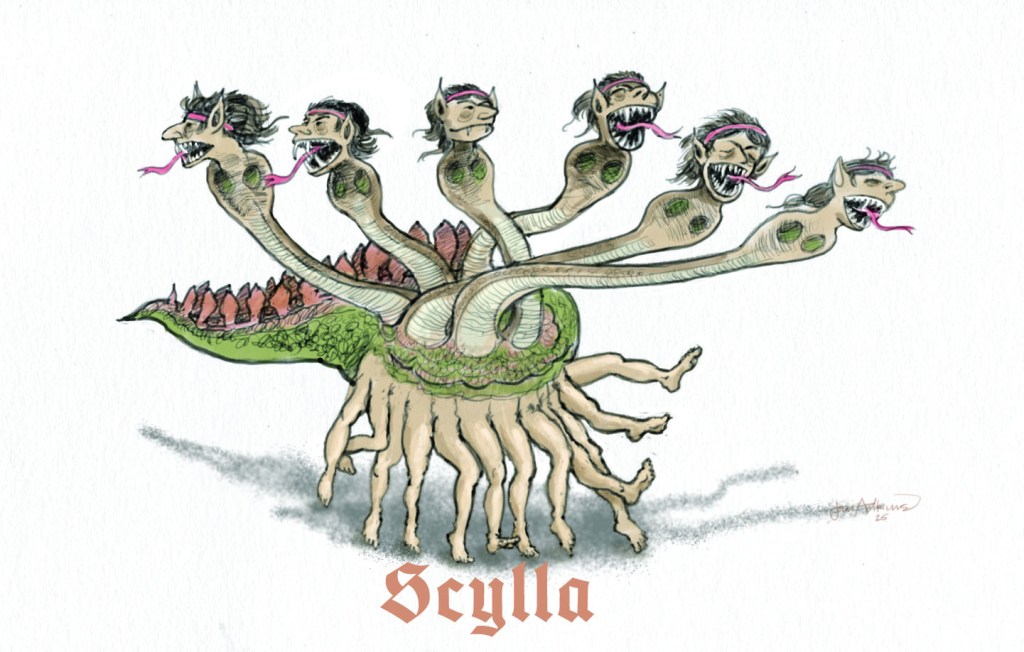
We can speculate that a few natural phenomena were given monstrous form, like the Scylla, a dreadful man-eating creature of seven heads on snakelike necks and twelve feet. Scylla lived across a narrow passage (only a bow shot) from Charybdis a whirpool that ate ships. Odysseus steered a careful course between them. All over the maritime world there are perilous narrow passages, and we say a shipmate is “between Scylla and Charybdis” if he’s between a rock and a hard place. The geographical site of this passage is considerably wider than a bowshot: the Strait of Messina is 1.9 miles (3.1 km) across with the village of Scylla on the mainland and the village of Charybdis on Sicily.
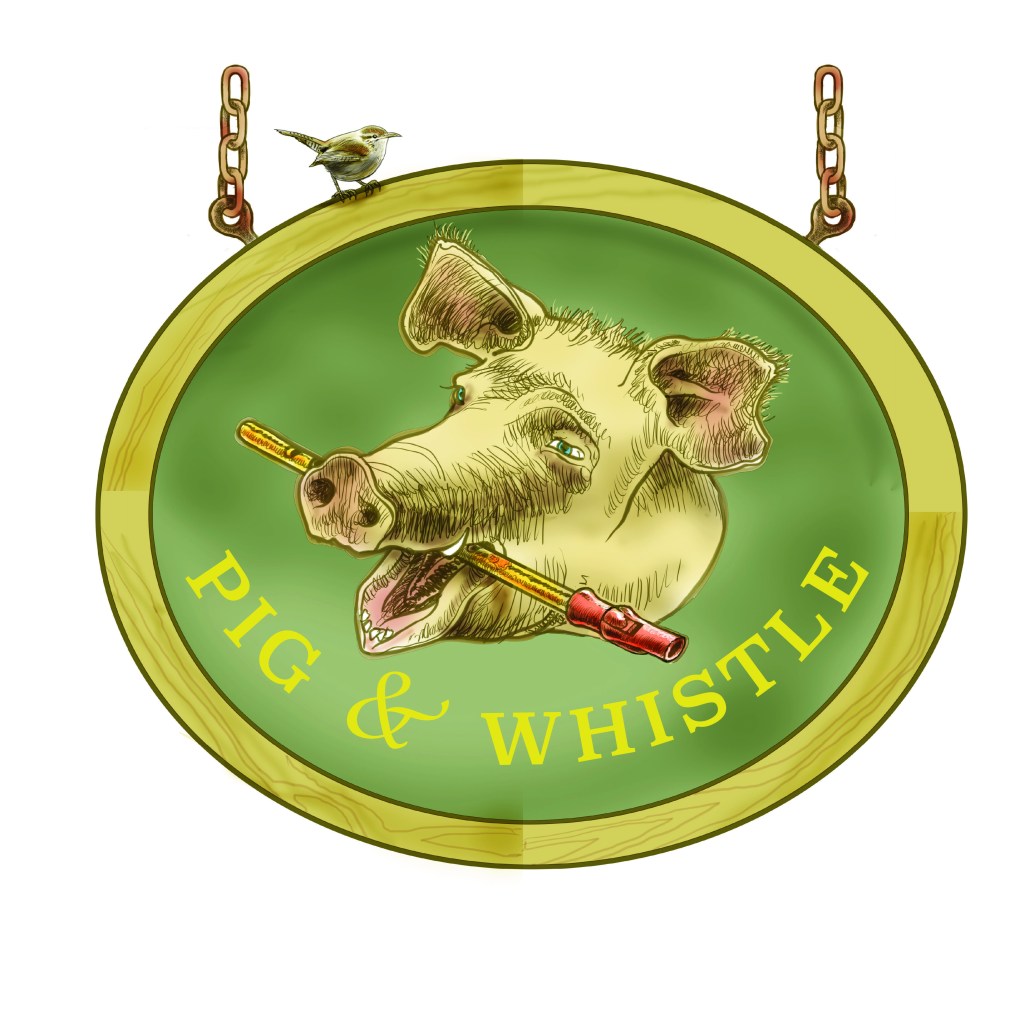
Good luck, bad luck, you takes your chance. Two things you must never do aboard, however, lest you doom your barkie. On any well-run vessel whistling is forbidden, for it calls up fierce winds. You may eat pork aboard safely but you must never mention the name of the animal. You may refer to the tasty creature as “Mr. Fatso” or “Prince Ham,” but never . . . ahem, you know.
These two solid superstitions are the reasons that hundreds of pubs set up by ex-sailors were named for the utter freedom from restraint therein: The Pig and Whistle.

Your comment, dissent, data, and support are welcome